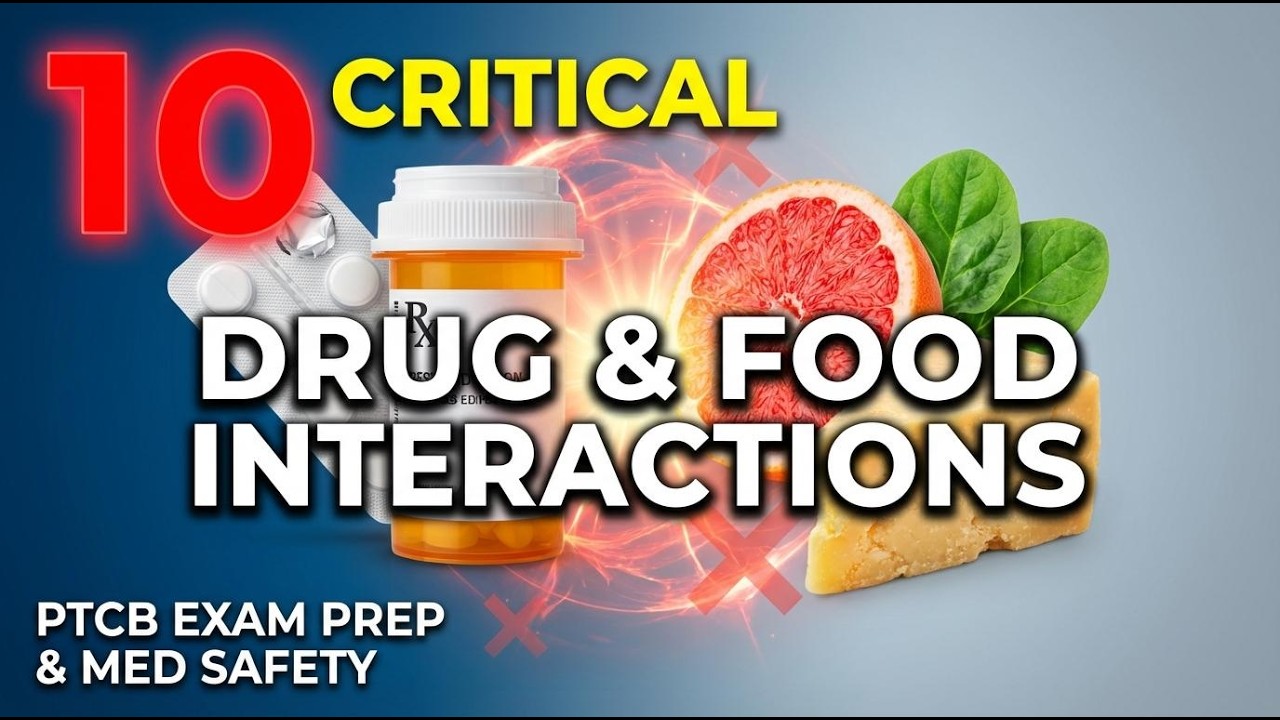
Memorize the most important drug interactions tested on the PTCB exam — fast. Flashcards, multiple-choice quiz, and match game all in one place.
Click card to flip · Space flip · ←→ navigate · G got it · R review again
Match each drug/food to its interaction. Click one from each side to pair them.
The full reference list of critical drug and food interactions tested on the 2026 PTCE exam. Use this alongside the game above to reinforce your learning.
| Drug / Class | Food / Substance | What Happens | Mechanism | Severity |
|---|---|---|---|---|
| Simvastatin, Atorvastatin, Lovastatin (CYP3A4 Statins) | 🍊 Grapefruit juice | Up to 3× drug in bloodstream → rhabdomyolysis → acute renal failure | Furanocoumarins destroy intestinal CYP3A4 enzymes irreversibly (72-hour effect — cannot be timed around) | CRITICAL |
| Fexofenadine (Allegra) | 🍊 Grapefruit juice | Decreased absorption → allergy medication doesn't work | Furanocoumarins block OATP gut transport protein — drug can't enter bloodstream | MODERATE |
| Metronidazole (Flagyl) | 🍺 Alcohol (any form — beverages, mouthwash, sauces, cold medicines) | Disulfiram-like reaction: flushing, nausea, vomiting, tachycardia, headache, severe cramping | Metronidazole blocks acetaldehyde dehydrogenase → toxic acetaldehyde floods bloodstream. Avoid ALL alcohol for 48–72 hrs after last dose | HIGH |
| Warfarin (Coumadin) | 🥬 Vitamin K foods (spinach, kale, broccoli) | Sudden increase → blood thickens → stroke risk. Sudden decrease → blood thins → hemorrhage risk | Vitamin K is the substrate warfarin blocks. Consistency matters — the dose is calibrated to the patient's baseline intake | CRITICAL |
| Tetracyclines (Doxycycline) | 🥛 Dairy (milk, cheese, yogurt) | Antibiotic never absorbs into blood → infection untreated | Calcium ions chelate (handcuff) to drug → insoluble complex too large for gut wall absorption. 2-hour separation required | HIGH |
| Fluoroquinolones (Ciprofloxacin) | 🥛 Dairy / Antacids / Iron supplements | Antibiotic not absorbed → bacteria multiply unchecked | Multivalent cations (Ca²⁺, Mg²⁺, Al³⁺, Fe²⁺) form chelate complex + antacids raise pH preventing dissolution. 2-hour separation required | HIGH |
| MAOIs (Phenelzine, Selegiline) | 🧀 Tyramine-rich foods (aged cheese, cured meats, red wine) | Hypertensive crisis — sudden, dangerous spike in blood pressure | MAOIs block monoamine oxidase that normally breaks down tyramine; tyramine accumulates and releases norepinephrine | CRITICAL |
| Lithium | 💧 Dehydration / Low sodium intake | Lithium toxicity: tremors, confusion, seizures, coma | Kidneys cannot distinguish lithium from sodium — dehydration triggers sodium hoarding which captures lithium, spiking levels | CRITICAL |
| Drug 1 | Drug 2 | What Happens | Mechanism | Severity |
|---|---|---|---|---|
| Warfarin | Aspirin / NSAIDs (ibuprofen, naproxen) | Fatal GI hemorrhage or hemorrhagic stroke | NSAIDs displace warfarin from albumin proteins (doubles active warfarin) + create GI ulcers + inhibit platelets — triple threat | CRITICAL |
| Warfarin | High-dose Acetaminophen (>2,000 mg/day) | Elevated INR, increased bleeding risk | Toxic acetaminophen metabolites inhibit liver enzymes that metabolize warfarin — warfarin builds up in blood | HIGH |
| Digoxin | Quinidine | 100% increase in digoxin blood levels within 24 hours → fatal arrhythmia | Quinidine displaces digoxin from tissue binding sites AND blocks renal + biliary excretion simultaneously — double attack | CRITICAL |
| SSRIs (Prozac, Zoloft, Paxil…) | MAOIs (Phenelzine, Selegiline) or St. John's Wort | Serotonin syndrome — hyperthermia, muscle rigidity, clonus, potentially fatal | SSRI plugs the serotonin drain; MAOI destroys the enzyme that breaks down excess serotonin — tub overflows | CRITICAL |
| Fluoxetine (Prozac) specifically | MAOIs | Serotonin syndrome even weeks after stopping Prozac | Fluoxetine's active metabolite (norfluoxetine) persists for weeks — minimum 5-week (35-day) washout required before MAOI | CRITICAL |
| Sildenafil (Viagra) | Nitrates (nitroglycerin, isosorbide mononitrate) | Catastrophic hypotension → cardiovascular collapse → death | Nitrates raise cGMP; sildenafil blocks PDE5 (the enzyme that destroys cGMP) → unchecked vasodilation. Absolute contraindication | CRITICAL |
| Bromocriptine (Parkinson's Rx) | Pseudoephedrine (Sudafed — OTC decongestant) | Hypertensive crisis — stroke, ventricular tachycardia | Ergot derivative causes systemic vasoconstriction + sympathomimetic pseudoephedrine clamps blood vessels → compounded cardiovascular crisis | CRITICAL |
| Spironolactone | TMP-SMX (Bactrim / Septra) | Severe hyperkalemia → sudden cardiac death. 12-fold hospitalization increase in elderly | Spironolactone spares potassium; trimethoprim independently mimics potassium-sparing diuretic in kidneys → double blockade | CRITICAL |
| Lithium | Thiazide diuretics (hydrochlorothiazide) | Lithium toxicity: tremors, confusion, seizures | Diuretic causes sodium loss → compensatory kidney sodium-hoarding captures lithium along with sodium → lithium blood levels spike | CRITICAL |
| Lithium | NSAIDs (ibuprofen, naproxen) | Lithium toxicity | NSAIDs inhibit prostaglandins → reduce renal blood flow → kidneys cannot clear lithium → levels build dangerously | HIGH |
| CYP3A4 Statins (atorvastatin, lovastatin, simvastatin) | Clarithromycin or Erythromycin (macrolide antibiotics) | Rhabdomyolysis → renal failure | Macrolides are potent CYP3A4 inhibitors — same mechanism as grapefruit, statins flood the blood | CRITICAL |
| Clopidogrel (Plavix) | Omeprazole / Esomeprazole (PPIs) | Antiplatelet drug inactive → patient unprotected against blood clots and stroke | PPIs inhibit CYP2C19, the enzyme that activates the clopidogrel prodrug. Use pantoprazole instead — minimal CYP2C19 inhibition | CRITICAL |
| Metronidazole (Flagyl) | Alcohol (any form — beverages, mouthwash, sauces) | Disulfiram-like reaction: flushing, nausea, vomiting, tachycardia, severe cramping | Metronidazole inhibits acetaldehyde dehydrogenase → toxic acetaldehyde accumulates in blood | HIGH |
| Opioids (any — codeine, hydrocodone, oxycodone, morphine) | Benzodiazepines (alprazolam, diazepam, lorazepam, clonazepam) | Fatal respiratory depression — breathing stops | Synergistic CNS depression; both suppress brainstem respiratory centers simultaneously. FDA Black Box Warning. | CRITICAL |
| Tramadol | SSRIs, MAOIs | Serotonin syndrome + lowered seizure threshold | Tramadol is a weak SNRI — combined with SSRIs/MAOIs, serotonin overflows the synapse | CRITICAL |
| ACE Inhibitors (lisinopril, enalapril) | Potassium supplements / K-sparing diuretics (spironolactone, amiloride) | Hyperkalemia → fatal cardiac arrhythmias | ACE inhibitors reduce aldosterone → kidneys retain K+. Additional K+ sources create dangerous accumulation | CRITICAL |
| Rifampin (TB antibiotic) | Warfarin, oral contraceptives, HIV antivirals, many others | Subtherapeutic drug levels → clot formation, pregnancy, viral rebound | Rifampin is a powerful CYP inducer — accelerates metabolism of co-administered drugs, dropping blood levels below therapeutic range | CRITICAL |
| Azithromycin / Levofloxacin / Ondansetron | Other QT-prolonging drugs (antipsychotics, antiarrhythmics, tricyclics) | Torsades de Pointes → ventricular fibrillation → sudden cardiac death | Additive QT-interval prolongation → lethal ventricular arrhythmia | CRITICAL |
📌 2026 Update: The PTCE no longer tests NTI drugs as a standalone category — but these drugs appear throughout drug interaction questions. Know their toxicity signs and interactions cold.
| Drug (Safety Alert) | Use | Toxicity Signs | Critical Interaction | Protocol |
|---|---|---|---|---|
| Digoxin | Heart failure, atrial fibrillation | 🟡 Yellow/green halos around lights, nausea, vomiting, bradycardia, fatal arrhythmia | + Quinidine → 100% spike in 24 hrs (displacement + blocked excretion) | Cut digoxin dose in HALF before first dose of quinidine |
| Lithium | Bipolar disorder (mood stabilizer) | Tremors, confusion, seizures, coma (triggered by dehydration, NSAIDs, or diuretics) | + Thiazide diuretics → sodium-lithium confusion by kidney; + NSAIDs → reduced renal clearance | Use acetaminophen for pain; monitor serum levels; stay hydrated |
| Warfarin | Anticoagulant (blood thinner) — stroke/DVT prevention | Bleeding from unusual sites, prolonged bleeding, hematuria, melena. Monitor INR (target 2.0–3.0) | + NSAIDs = triple hemorrhage risk; + Aspirin = protein displacement; + Vitamin K changes | Recommend acetaminophen for pain; counsel on vitamin K consistency; monitor INR frequently |
| Phenytoin | Seizure disorder | Nystagmus, ataxia, diplopia, confusion, gingival hyperplasia | Many interactions — CYP2C9 substrate; carbamazepine, valproate alter levels | Monitor drug levels; counsel on dental hygiene for gum overgrowth |
| Levothyroxine | Hypothyroidism | Under: fatigue, weight gain, bradycardia. Over: palpitations, weight loss, tremors | Calcium, iron, antacids reduce absorption; separate by 4 hours; take on empty stomach | Take on empty stomach 30–60 min before food; separate from calcium/iron supplements |
| Drug A | Drug B | The Dangerous Difference | Worst-Case Error |
|---|---|---|---|
| Metoprolol Succinate (extended-release, once daily) | Metoprolol Tartrate (immediate-release, twice daily) | Succinate = slow 24-hr release; Tartrate = entire dose hits at once | Give 100mg Tartrate instead of Succinate → patient's heart rate crashes to 30–40 bpm, syncope, ER admission |
| Humalog (insulin lispro — rapid-acting) | Humulin N (NPH — intermediate-acting) | Humalog peaks in <1 hour; Humulin N peaks in 4–8 hours | Give Humalog for bedtime dose instead of Humulin N → entire dose hits in 45 min, blood sugar crashes, patient enters hypoglycemic coma in sleep |
| Hydralazine (blood pressure — vasodilator) | Hydroxyzine (antihistamine / mild sedative) | Hydralazine = powerful blood pressure drug; Hydroxyzine = allergy/anxiety medication | Healthy patient gets Hydralazine for anxiety → BP crashes to 70, syncope, traumatic head injury. Hypertensive patient gets Hydroxyzine → BP remains dangerously high, stroke |
| Epinephrine | Norepinephrine | Epinephrine = strong beta agonist (opens airways, restarts heart); Norepinephrine = primarily alpha agonist (clamps vessels) | Anaphylaxis patient gets norepinephrine instead of epinephrine → vessels clamp but airway doesn't open, patient suffocates |
| Oxycodone (single-entity opioid) | Percocet (oxycodone + 325mg acetaminophen) | Percocet contains hidden acetaminophen — patient may stack with OTC Tylenol | Patient takes Percocet + OTC Tylenol → rapidly exceeds 4,000mg acetaminophen daily limit → liver failure requiring transplant within 48 hours |
| Cetirizine (Zyrtec) | Sertraline (Zoloft) | Antihistamine vs. SSRI antidepressant | Dispensing SSRI to patient expecting antihistamine could expose patient to antidepressant without psychiatric oversight |
You've mastered drug interactions — now put it all together. Our timed PTCB practice tests simulate the real exam with 90 questions across all four domains, instant scoring, and detailed answer explanations.
Free · No sign-up required · Instant results